What Is the Right Age for a Child to Start Chess Classes?
19 Oct 2026 · 4 MIN READ · Chess Panda
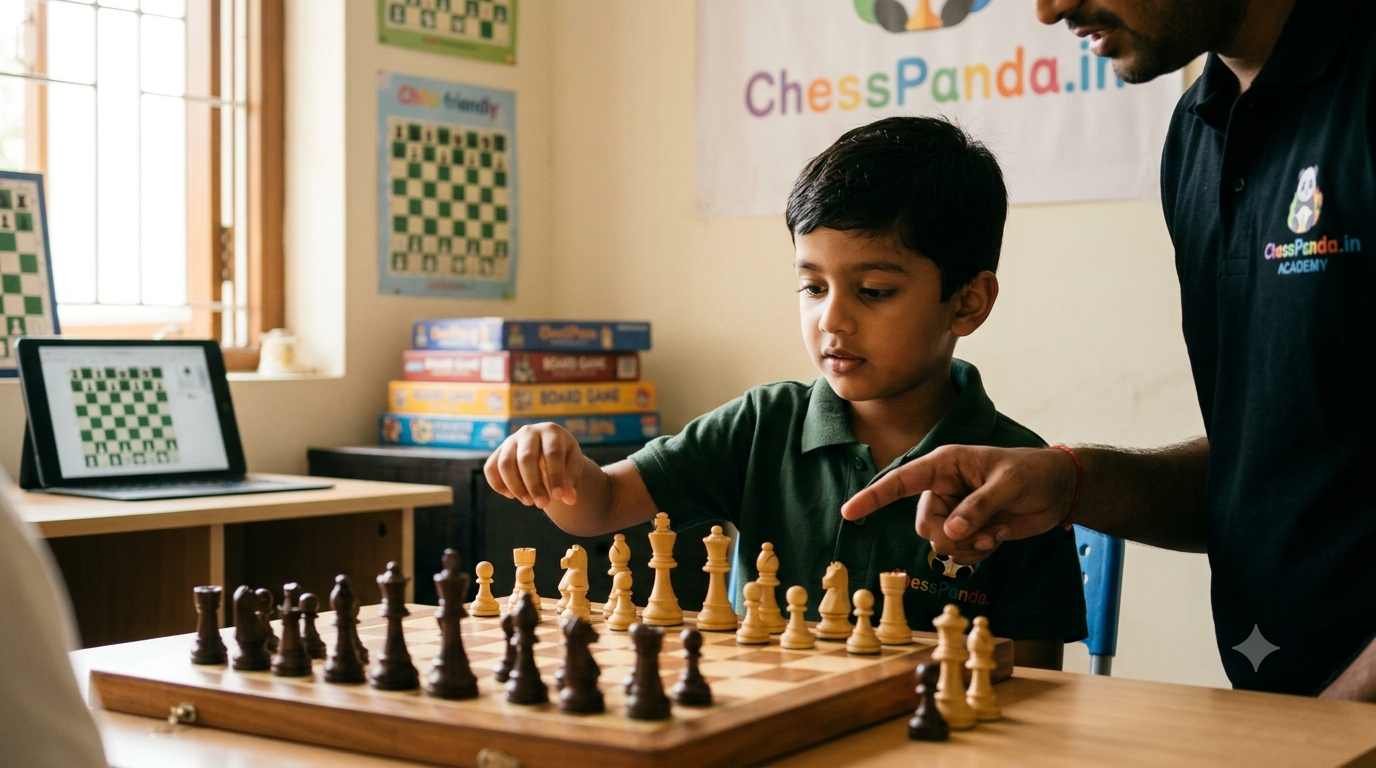
Every week, parents ask us the same question: “Is my four-year-old too young to learn chess, or is my ten-year-old starting too late?”
It’s understandable. A child who finds the rules frustrating may lose interest. Parents who wait may worry they’ve left it too late. But there’s no single age at which every child should start. What matters more is whether your child is ready to learn and enjoy the game.
Ages 5 to 7: A Good Time to Begin
For many children, ages 5 to 7 are a good time to begin formal chess lessons. They’re starting to understand rules, recognize patterns, and follow what happens after each move. Many can also focus on one activity for 15 to 20 minutes, which gives a coach time to introduce the board and pieces.
Three Signs Your Child May Be Ready Before Age 7
If you’re considering classes for a child aged 4 to 6, look for these signs:
- They remember rules. Can they play a simple board game, such as Snakes & Ladders or checkers, without frequent reminders?
- They understand directions. Can they tell up from down, left from right, and recognize a diagonal?
- They enjoy puzzles. Do they like spending time on jigsaws or more involved Lego builds?
If these sound like your child, a beginner’s chess class may be worth trying.
Starting at Ages 8 to 12 or Later
An eight, ten, or twelve-year-old can start chess, too. Older beginners may pick up the rules more quickly and be ready to discuss their decisions during a game.
- Tactics: An older child may learn how the pieces move quickly enough to move on to forks, pins, and skewers.
- Handling losses: They may be better able to talk through a lost game and try again.
- Planning: They may be ready to consider several moves ahead and work on longer-term plans.
Children progress at different rates, so age alone won’t tell you which class level fits.
How Chesspanda.in Adapts to Different Ages
At Chesspanda.in, lessons are tailored to a child’s stage of learning. Our learning environment uses the ChessPlay.io platform.
| Age Group | Focus Area | Teaching Methodology |
|---|---|---|
| Ages 4–6 | Piece movement & board geometry | Story-based learning, mini-games (e.g., "Pawn vs. Pawns"), high interaction |
| Ages 7–9 | Basic tactics & checkmate patterns | Interactive puzzles, guided peer play, immediate tactical feedback |
| Ages 10+ | Opening principles & calculation | Grandmaster game analysis, positional strategy, tournament preparation |
A child can start by learning what each piece does or by working through tactics they’re ready to tackle. Either way, the aim is to help them think through their moves, handle setbacks, and enjoy playing.
Wondering Where Your Child Should Start?
A trial class gives a coach a chance to see what your child already knows and recommend a starting level. Your child can join us online through Chesspanda.in or at our physical academy in T.Nagar, Chennai.
Tell us your child’s age and experience when you book.
Questions Parents Ask
What is the best age for a child to start chess?
For many children, ages 5 to 7 are a good time to begin formal chess lessons. There is no single age at which every child should start. Readiness and enjoyment matter more than age alone.
Can a 4-year-old learn chess?
A child aged 4 to 6 may be ready if they remember simple game rules, understand board directions and enjoy puzzles. A beginner’s chess class may be worth trying.
Is age 10 or 12 too late to start learning chess?
No. An eight-, ten-, or twelve-year-old can start chess, too. Older beginners may pick up the rules more quickly. Children progress at different rates, so age alone does not determine the right class level.